Myeloid Cells
Perspective
髓系细胞是免疫系统里最重要的“组织执行层”之一。它们通常和 innate immunity、炎症、吞噬、抗原呈递、杀菌、过敏反应、抗寄生虫免疫和组织修复联系在一起。读免疫学或单细胞文章时,myeloid cells 经常不是一个单独细胞类型,而是一组来源和功能相关的细胞集合。
先记住一个实用边界:myeloid cells 不是 lymphocytes。 它们大多来自 myeloid lineage,包括 macrophages、dendritic cells、neutrophils、eosinophils、basophils 和 mast cells。它们不依赖 TCR/BCR 做高度特异性识别,但可以快速感知病原体、组织损伤和抗体包被目标,并把局部组织信号转化为炎症或清除反应。
Definition
Myeloid cells are immune cells derived from the myeloid lineage, including monocytes/macrophages, dendritic cells, granulocytes, and mast cells. They are central to innate immune defense and also help shape adaptive immunity through antigen presentation, cytokine production, and tissue-level inflammation.
中文理解:髓系细胞是一组来自髓样谱系的免疫细胞。它们不像 T cells 和 B cells 那样以 antigen-specific clonal receptors 为核心,而是更偏向快速识别、吞噬、杀菌、释放颗粒、产生 cytokines、呈递抗原和调节组织环境。
Main Cell Types
Monocytes 是血液中循环的髓系细胞,也是很多组织 macrophages 和 inflammatory macrophages 的来源之一。常见粗分是 classical monocytes 和 non-classical monocytes:前者通常 CD14 高,后者通常 FCGR3A/CD16 高。进入组织后,monocytes 可以逐渐表达 HLA genes、CD68、CD163、炎症 cytokines/chemokines,并向 macrophage-like states 过渡。读单细胞文章时,monocyte 和 macrophage 经常不是完全割裂的两个点,而是一条 tissue entry 和 differentiation continuum。
Macrophages 主要负责 phagocytosis、清除死亡细胞和病原体、产生 cytokines,并参与组织修复。它们可以来自 circulating monocytes,也可以是 embryonic origin 的 tissue-resident macrophages。Macrophage 这个名字更像一个功能和组织状态概念,不只是一个固定 marker。
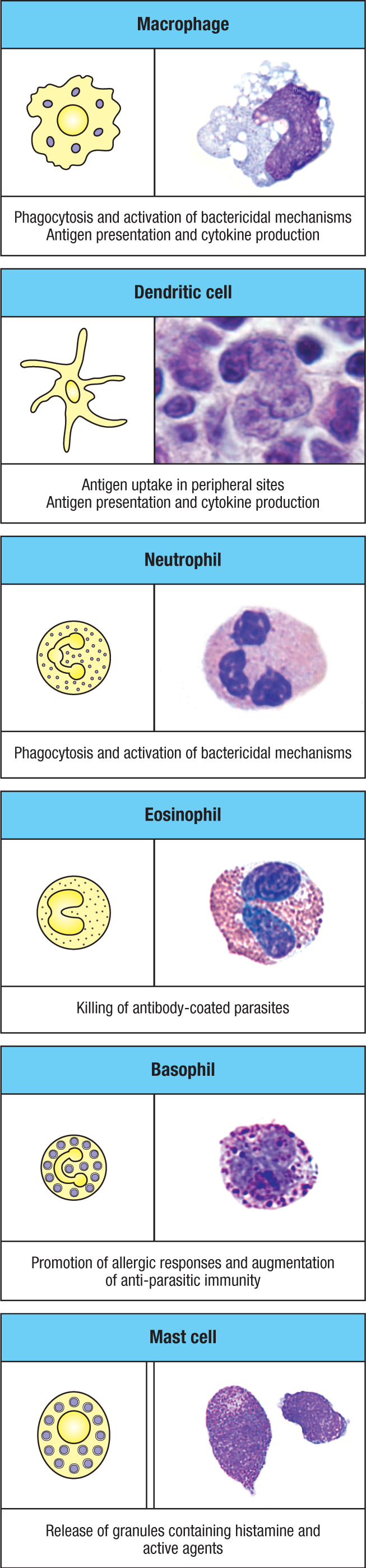
Dendritic cells 是连接 innate immunity 和 adaptive immunity 的关键细胞。它们在外周组织摄取 antigen,迁移到 lymph nodes,向 naive T cells 呈递 antigen,并通过 costimulation 和 cytokines 影响 T cell differentiation。图里把 dendritic cells 的核心功能概括为 antigen uptake、antigen presentation 和 cytokine production。
Neutrophils 是急性炎症中非常快速的效应细胞,尤其重要于细菌和真菌感染。它们可以 phagocytose microbes,释放 antimicrobial granules,产生 reactive oxygen species,也可形成 NETs。血液中 neutrophils 数量多,进入组织后通常寿命较短,但杀伤能力强。
Eosinophils 常和 helminth infection、allergy、asthma 和 type 2 inflammation 相关。它们的颗粒蛋白可以伤害大型寄生虫,也可能在过敏性炎症中造成组织损伤。图里的重点是 killing of antibody-coated parasites。
Basophils 是血液中的颗粒细胞,和 allergic responses、IgE-dependent activation、histamine release 以及 anti-parasitic immunity 有关。它们数量少,但在 type 2 immunity 中可以放大局部炎症和 cytokine signals。
Mast cells 主要驻留在组织中,尤其靠近皮肤、黏膜、血管和神经。它们含有 histamine 等颗粒内容物,受到 IgE cross-linking、补体片段或组织损伤信号刺激后可快速 degranulate,引发血管扩张、通透性增加、瘙痒、平滑肌收缩和过敏反应。
Important Subsets
很多 myeloid cells 在实际文献中不会只写大类名,而会进一步按 lineage、marker、组织位置和 activation state 细分。
Dendritic cell subsets:
cDC1: conventional dendritic cell 1,常见 marker 包括CLEC9A、XCR1、CADM1。通常和 cross-presentation、CD8+ T cell response 联系更紧。cDC2: conventional dendritic cell 2,常见 marker 包括CD1C、FCER1A。常和 CD4+ T cell priming、炎症性 DC 状态和更复杂的 cDC2 heterogeneity 相关。pDC: plasmacytoid dendritic cell,常见 marker 包括LILRA4、TCF4、GZMB。经典功能是大量产生 type I interferon,尤其在抗病毒反应中重要。LAMP3+ cDC / mregDC: 肿瘤和炎症组织中常见的 mature、migratory、regulatory DC state,表达LAMP3,常伴随迁移、成熟、PD-L1/regulatory molecules 和 T cell interaction。它不是一个普通静态 lineage marker,更像 cDC activation/maturation 后形成的状态。
Macrophage and monocyte-related states:
classical monocytes: 通常CD14高,偏炎症募集和组织进入。non-classical monocytes: 通常FCGR3A/CD16高,常和血管巡逻、炎症监测相关。tissue-resident macrophages: 可能来自胚胎期 progenitors,也可能在组织中长期 self-renewal;不同组织有不同命名和 marker,例如 microglia、Kupffer cells、alveolar macrophages。monocyte-derived macrophages: 通常来自炎症或肿瘤条件下募集的 circulating monocytes,进入组织后被局部 TME 重塑。
Tumor And Single-Cell Context
在肿瘤单细胞文章里,myeloid cell name 往往不是单一 lineage name,而是 lineage + tissue context + activation state + functional program 的组合。比如 SPP1+ TAM 不是一个基础免疫学课本细胞类型,而是 tumor-associated macrophage 的一种表达状态。
TAMs 是 tumor-associated macrophages。它们不能简单套用 M1/M2 二分法。很多体内 TAM states 会同时表达 M1-like 和 M2-like signatures,所以更应该看具体功能程序:
SPP1+ TAMs: 常和 angiogenesis、ECM remodeling、tumor progression 相关。C1QC+ TAMs: 常显示 phagocytosis、complement-like 或 tissue macrophage-related programs。ISG15+ TAMs: 偏 interferon-stimulated gene program。LYVE1+ macrophages: 常和 resident/interstitial macrophage-like states 相关,未必是 tumor-enriched。FN1+、VCAN+、INHBA+TAMs: 在不同癌种中可作为 alternative pro-angiogenic macrophage states 出现。
Tumor DCs 也需要按状态读。LAMP3+ cDCs 在多癌种肿瘤中常见,可能来自 cDC1 或 cDC2,表达 maturation/migration genes,也可能表达 PD-L1、CCL17、IDO1 等 regulatory or immunosuppressive molecules。读到 LAMP3+ DC 时,不要只把它理解成“DC marker 阳性”,而要问它是否代表 mature/migratory/regulatory cDC state。
Mast cells 在肿瘤里功能不固定。VEGFA+ mast cells 可提示 pro-angiogenic/pro-tumor tendency;TNF+ mast cells 可能与 DC activation、T cell priming 或 anti-tumor immunity 相关。但这只是功能轴,不是完整定义。不同癌种、不同 tissue niche 中 mast cells 的意义可能相反。
因此,在 single-cell 数据中注释 myeloid cells 时,不能只问“是不是 macrophage/DC/mast cell”。更好的问题是:它来自哪个 lineage?在什么组织位置?是否 tumor-enriched?表达什么 activation、migration、phagocytosis、angiogenesis、interferon 或 immunosuppressive program?
Myeloid Cells And Adaptive Immunity
髓系细胞虽然常被归入 innate immunity,但它们并不只负责“早期反应”。Dendritic cells 是 naive T cell activation 的核心 antigen-presenting cells;macrophages 可以向 effector T cells 呈递 antigen,并被 IFN-gamma 等信号激活;mast cells、basophils 和 eosinophils 参与 type 2 immunity,和 TH2 cells、IgE、IL-4、IL-5、IL-13 等轴线连接紧密。
因此,myeloid 与 lymphoid 不是互不相干的两套系统。更准确的理解是:lymphoid cells 提供高度特异的识别、记忆和调控,而 myeloid cells 把这些信号落实到组织层面的吞噬、杀伤、炎症、屏障反应和修复。
How To Read This Figure
这张图把几类主要髓系细胞放在一起,适合作为功能速查图。
- Macrophages: phagocytosis、bactericidal mechanisms、antigen presentation、cytokine production。
- Dendritic cells: antigen uptake in peripheral sites、antigen presentation、cytokine production。
- Neutrophils: phagocytosis 和 bactericidal mechanisms,是急性炎症中的快速杀菌细胞。
- Eosinophils: killing of antibody-coated parasites,常和 type 2 immunity 及 allergy 相关。
- Basophils: promotion of allergic responses and augmentation of anti-parasitic immunity。
- Mast cells: release of granules containing histamine and other active agents,常见于组织过敏反应和屏障部位炎症。
读图时不要只记细胞名字,要同时问三个问题:它在哪里?它识别什么?它通过什么效应机制改变组织环境?
Key Points
- Myeloid cells 大多属于 innate immune system,但会强烈影响 adaptive immunity。
- Monocytes 是 circulating myeloid cells,也是很多 inflammatory macrophage states 的来源之一。
- Macrophages 和 neutrophils 都能吞噬和杀菌,但 macrophages 更偏组织驻留、清除和修复,neutrophils 更偏急性炎症快速杀伤。
- Dendritic cells 的核心价值是把外周组织中的 antigen 信息带到 lymph nodes,启动 T cell response。
- DCs 需要进一步区分 cDC1、cDC2、pDC 和 LAMP3+ mature/regulatory cDC states。
- Eosinophils、basophils 和 mast cells 常和 type 2 immunity、allergy、IgE 和 anti-parasitic immunity 放在一起理解。
- Mast cells 主要是 tissue-resident cells;basophils 主要在血液中循环。
- Granules 不是“装饰性形态”,而是这些细胞快速释放 effector molecules 的功能基础。
- 在 single-cell 数据中,myeloid clusters 的命名要同时看 lineage markers、tissue context、activation state 和 functional genes;尤其 TAMs 不应简单用 M1/M2 概括。
Note
髓系细胞很容易被过度简化成“先天免疫细胞”。这个说法对入门有用,但不够精确。它们既是早期防御细胞,也是抗原呈递细胞、炎症组织者、过敏反应执行者、寄生虫防御细胞和组织修复参与者。
对我来说,这一页是 immune cell map 的第二层:先知道 lymphoid/myeloid 的大分支,再在 myeloid 里区分 phagocytes、antigen-presenting cells、granulocytes 和 tissue-resident effector cells。
Sources
- Janeway’s Immunobiology
- Janeway’s Immunobiology, NCBI Bookshelf
- The components of the immune system, NCBI Bookshelf