Use a named biopalette palette for a discrete colour or fill mapping. The
scale asks get_palette() for exactly as many colours as the trained data
has levels. Qualitative palettes therefore use their first n colours,
while sequential and diverging palettes sample n colours across their
complete ramps.
Usage
scale_color_biopalette(
  palette,
  ...,
  type = NULL,
  reverse = FALSE,
  palettes_dir = NULL
)

scale_colour_biopalette(
  palette,
  ...,
  type = NULL,
  reverse = FALSE,
  palettes_dir = NULL
)

scale_fill_biopalette(
  palette,
  ...,
  type = NULL,
  reverse = FALSE,
  palettes_dir = NULL
)
Arguments
- palette
Character. Name of the palette.
- ...
Passed to
ggplot2::discrete_scale(), for examplename,breaks,labels,limits,na.value,drop, andguide.- type
Character. One of
"sequential","diverging", or"qualitative". IfNULL, the type is detected automatically.- reverse
Logical. Reverse the palette. Default:
FALSE.- palettes_dir
Character. Directory holding a palette collection. If
NULL, the palettes bundled with the package are used.
Details
All three palette types are supported. Qualitative palettes suit unordered categories; sequential and diverging palettes can be useful for ordered categories.
Examples
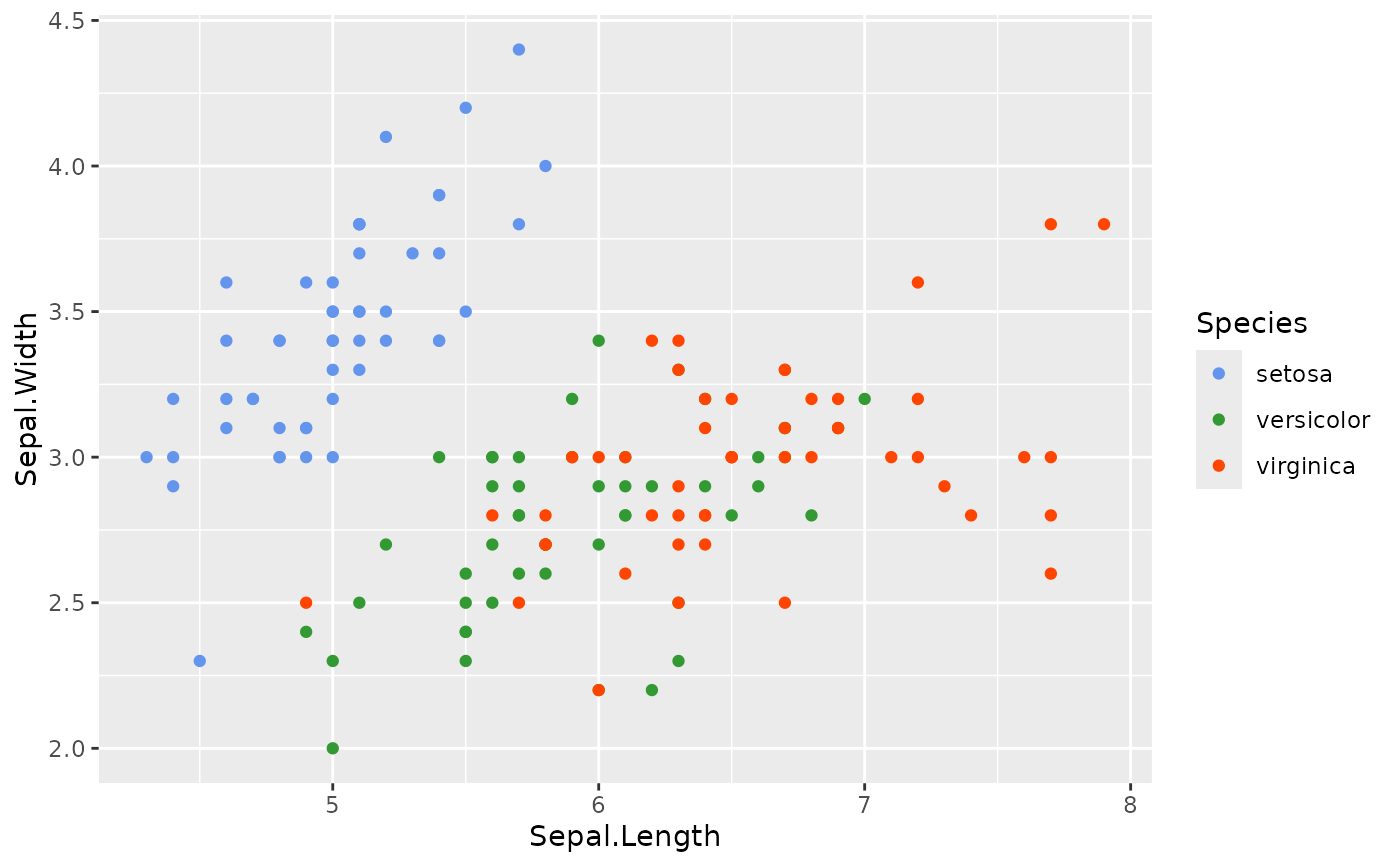
library(ggplot2)
ggplot(iris, aes(Sepal.Length, Sepal.Width, colour = Species)) +
geom_point() +
scale_color_biopalette("three_body")
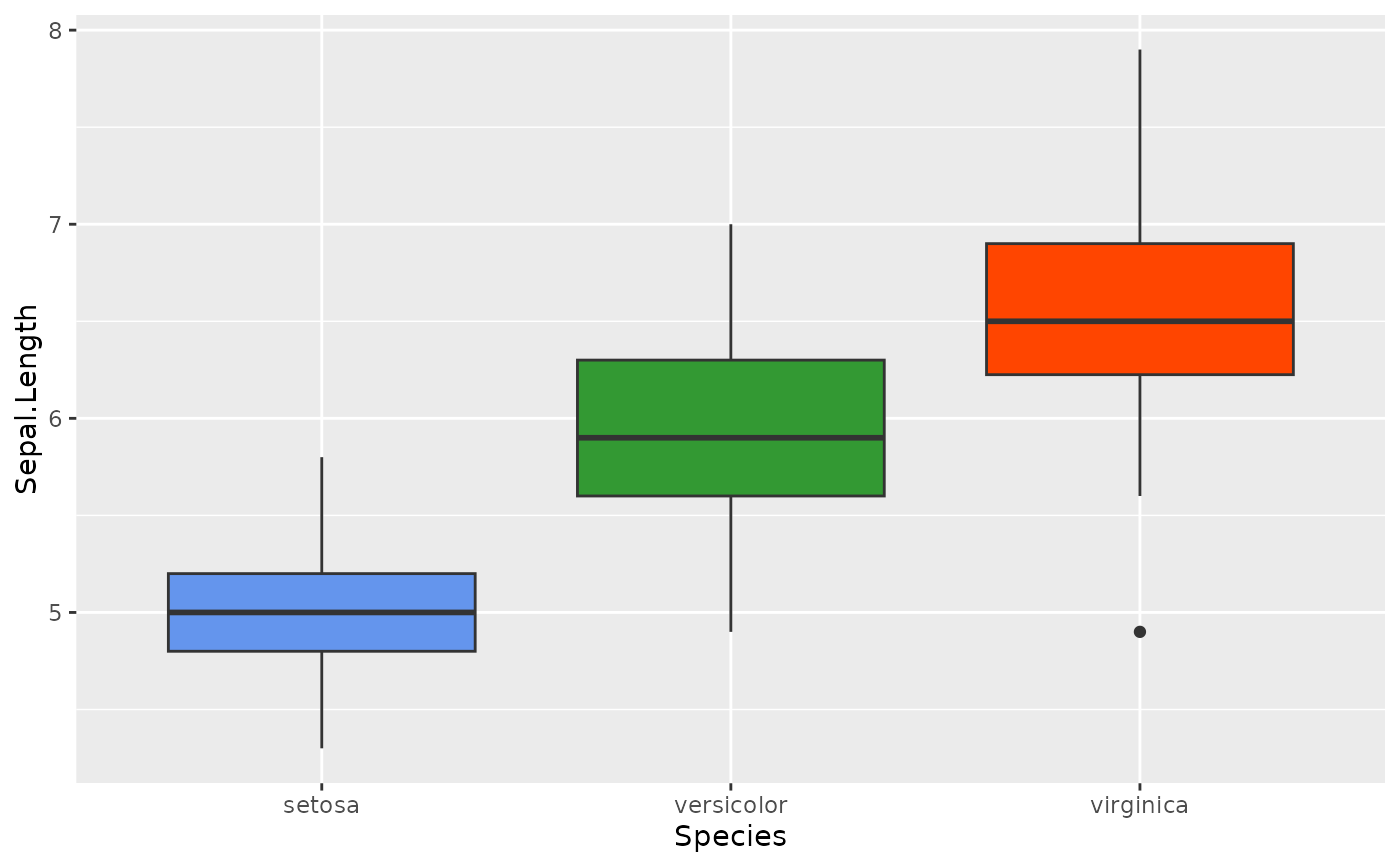
 ggplot(iris, aes(Species, Sepal.Length, fill = Species)) +
geom_boxplot() +
scale_fill_biopalette("three_body", guide = "none")
ggplot(iris, aes(Species, Sepal.Length, fill = Species)) +
geom_boxplot() +
scale_fill_biopalette("three_body", guide = "none")